If your child isn’t talking the way you expected — or you’re struggling to understand them long after other kids their age are chatting away — it’s natural to worry.
Speech is how children ask for what they need, make friends, and tell you about their day. When it doesn’t come easily, it affects far more than words.
If you’ve been searching for speech therapy in Ghaziabad, this guide will walk you through what speech therapy actually involves, the signs worth paying attention to, and how to choose the right support.
At Percept Rehabilitation Center in Indirapuram, our speech-language therapists work with children every day to help them find their voice and communicate with confidence.
What Is Speech Therapy, Really?
Speech therapy assesses and treats difficulties with communication — and sometimes feeding and swallowing too.
A qualified speech therapist looks at how a child produces sounds, understands language, uses words and sentences, and stays fluent, then builds a plan around what that specific child needs.
It’s a common misconception that speech therapy is only about pronunciation.
In reality, speech and language therapy can cover:
- Building vocabulary
- Understanding instructions
- Forming sentences
- Social communication
- Fluency and stammering support
- Oral-motor skills for clear speech
It’s never a one-size-fits-all program — and that’s exactly what makes it effective.
Who Can Benefit From Speech Therapy?
Families across Ghaziabad and the NCR come to us for a wide range of reasons.
Speech therapy commonly helps children with:
- Delayed Speech or Language — when a toddler isn’t babbling, speaking, or combining words at the expected age.
- Articulation Difficulties — trouble pronouncing certain sounds, making speech hard for others to understand.
- Stammering or Stuttering — repetitions, prolongations, or blocks that disrupt the flow of speech.
- Autism Spectrum Disorder — support for verbal and non-verbal communication, often alongside ABA Therapy and Occupational Therapy.
- Hearing Impairment — developing speech and language alongside hearing aids or cochlear implants.
- Feeding and Swallowing Difficulties — picky eating or trouble chewing and swallowing safely.
Speech therapy isn’t only for children, but early intervention makes a genuine difference.
A child’s brain is most adaptable in the first few years of life, so the sooner difficulties are addressed, the more progress is typically possible.
Signs Your Child May Need a Speech Therapist
Parents are almost always the first to notice when something feels “off.”
Consider booking an assessment if your child:
- Isn’t saying single words by around 18 months or short phrases by age two
- Is much harder to understand than other children their age
- Repeats sounds or syllables, or seems to get stuck when speaking
- Struggles to follow simple instructions or answer questions
- Points or pulls you instead of using words and becomes frustrated while communicating
Noticing one or two of these signs doesn’t always mean there’s a serious problem — but a professional assessment provides clarity and peace of mind.
How Speech Therapy Works at Percept
At Percept, therapy rarely looks like a child being drilled on words.
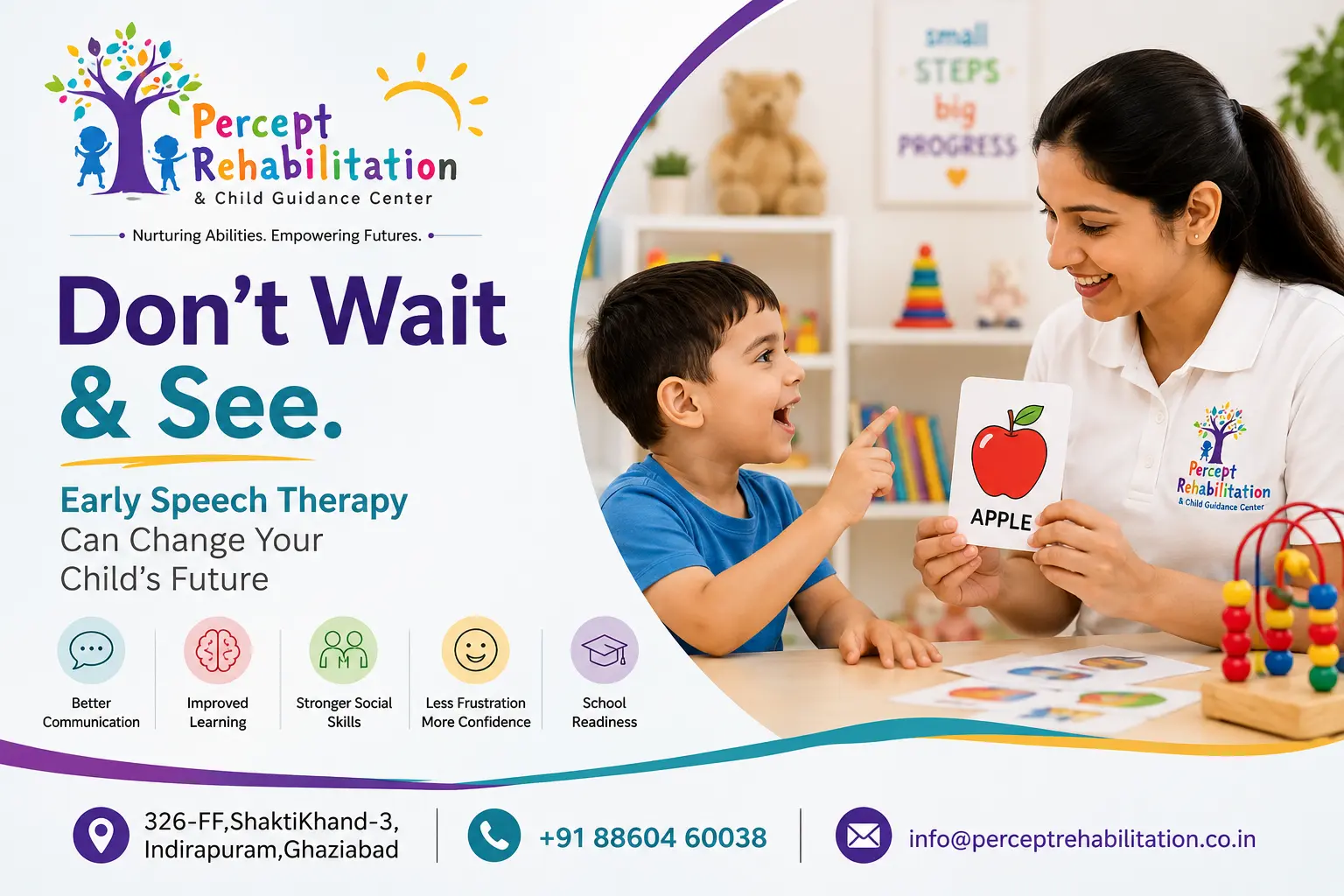
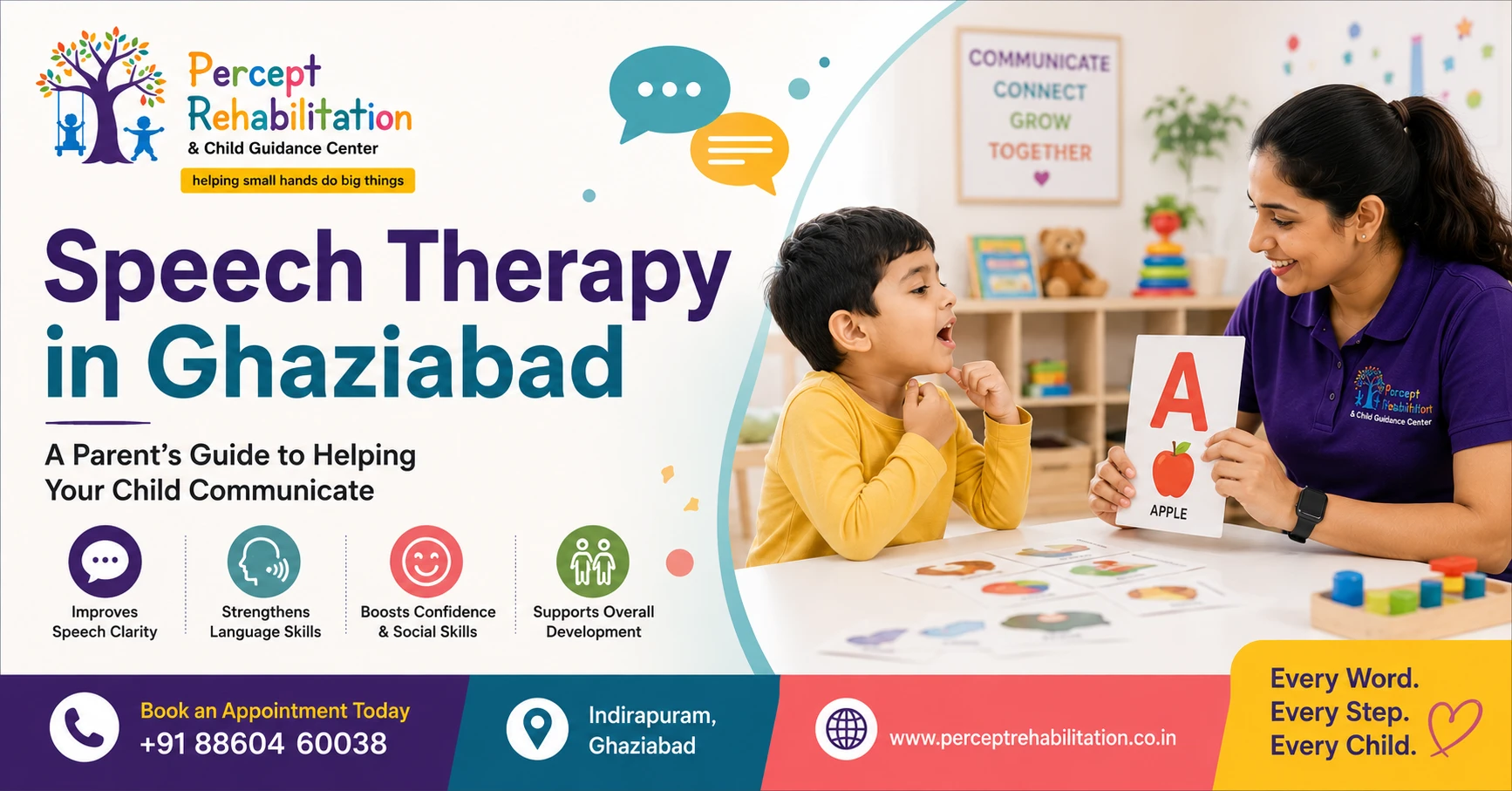
For young children, sessions are play-based and engaging because a child who’s having fun stays motivated and makes faster progress.
Through carefully designed activities, children build sounds, words, and confidence without it ever feeling like hard work.
Because communication challenges rarely happen in isolation, our speech therapists work alongside our Occupational Therapy, Sensory Integration Therapy, and Special Education teams under one roof.
That means coordinated care and fewer appointments scattered across the city.
What to Expect at Your First Session
Your first visit to our speech therapy clinic in Ghaziabad is a relaxed assessment, not a test.
- Initial Consultation — a conversation about your concerns, your child’s history, and daily routine.
- Structured Assessment — a friendly, play-based evaluation of how your child understands and uses language.
- Individualized Plan — clear goals built around your child’s specific needs.
- Ongoing Sessions — regular therapy with progress reviews and guidance you can use at home.
Parents are active partners in our process, not just observers.
We believe what happens at home between sessions matters just as much as what happens in the clinic.
How to Choose the Right Speech Therapist in Ghaziabad
Not every centre offers the same quality of care.
As you compare options, keep these in mind:
- Qualified, certified therapists
- Personalized treatment plans
- Strong parent involvement
- Multiple services under one roof
- Convenient location and flexible timings
A centre within Indirapuram, Vaishali, Vasundhara, Noida, or the wider Ghaziabad area means shorter commutes, a calmer child, and a routine your family can actually maintain.
Frequently Asked Questions
How long does speech therapy take to show results?
Some families notice changes within a few weeks, while more complex needs may require several months of consistent therapy.
At what age should speech therapy start?
Early intervention often produces the best outcomes, but speech therapy can help children of all ages.
How often are sessions needed?
Most children attend one or two sessions per week, depending on their therapy goals.
Do you treat stammering and autism-related communication challenges?
Yes. Our team supports children with stammering, articulation difficulties, autism spectrum communication challenges, and more.
Book a Speech Therapy Assessment in Ghaziabad
Clear communication can transform a child’s confidence — and the right time to begin is now.
If you’ve been searching for trusted speech therapy in Ghaziabad, our experienced team at Percept Rehabilitation Center is here to help your child find their voice.
Address: 326-FF, Shakti Khand-3, Indirapuram, Ghaziabad
Phone: +91 88604 60038
Email: info@perceptrehabilitation.co.in
Hours: Mon–Sat, 9:00 AM – 8:00 PM (Sunday Closed)
Website: www.perceptrehabilitation.co.in
Book an appointment online and give your child the support they deserve, close to home.