When your child is diagnosed with Autism Spectrum Disorder (ASD), parents are often introduced to a lot of new medical terms and therapies. It can feel like learning a whole new language. One of the most common and helpful therapies you will hear about is Occupational Therapy, often called OT.
But what exactly is it? When adults think of an “occupation,” they usually think of a job. But a child’s “occupation” is simply growing up—playing, learning, making friends, and figuring out how to do things on their own. For children with autism, these normal parts of growing up can sometimes be really difficult. Occupational therapy doesn’t try to change who the child is. Instead, it gives them the tools they need to handle the world around them, feel comfortable in their own skin, and become more independent.
Here is a complete guide to understanding how occupational therapy works and why it is so powerful for children on the autism spectrum.
What Does an Occupational Therapist Actually Do?
Every child with autism is completely unique. One child might be great at reading but struggle to hold a pencil. Another child might love talking about their favorite topics but get incredibly upset by the sound of a vacuum cleaner. Because autism is a wide spectrum, there is no “one-size-fits-all” treatment.
An occupational therapist acts like a detective and a coach combined. First, they carefully watch how a child plays, moves, and reacts to things. They figure out exactly what the child is struggling with—whether it is tying their shoes, dealing with loud noises, or playing with other kids. Then, they create a special, customized plan that feels just like playing, but is actually hard at work building essential life skills.
The Main Areas Occupational Therapy Helps With
Occupational therapy focuses on breaking down big, frustrating challenges into small, totally manageable steps. Here are the most common areas where OT makes a huge difference:
1. Handling Sensory Processing Issues
We all take in the world through our five senses, but children with autism often experience these senses differently. This is called sensory processing.
- Too Much Feeling (Hypersensitive): Some children feel things too strongly. A normal classroom might sound like a rock concert to them. The tag on their shirt might feel like sandpaper.
- Not Enough Feeling (Hyposensitive): Other children don’t feel things strongly enough. They might constantly seek out movement by spinning in circles, crashing into the couch, or chewing on their toys.
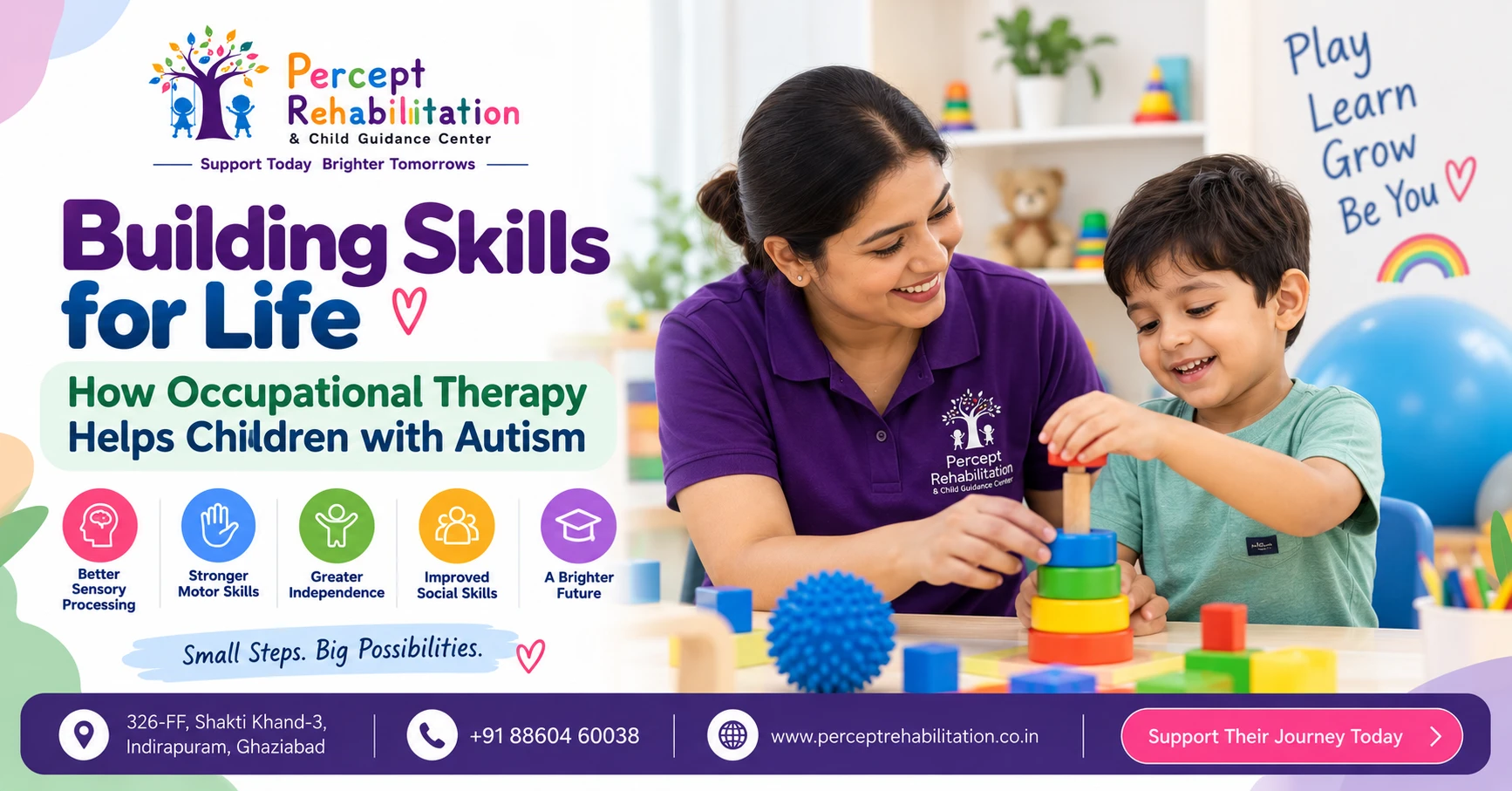
How OT Helps: Therapists create a “sensory diet.” This isn’t about food; it’s a menu of activities that help calm the child’s brain. They might use weighted blankets to provide a comforting hug-like feeling, have the child swing on a special indoor swing to help their balance, or use noise-canceling headphones. This helps the child feel safe and focused.
2. Building Motor Skills (Movement)
Many children with autism struggle with coordination. They might seem a little clumsy or have a hard time getting their hands to do what their brain wants.
- Fine Motor Skills: These are the small muscle movements in the hands and fingers. If a child has weak fine motor skills, they will struggle with writing, using a fork, or buttoning a jacket. Therapists use fun games—like picking up small beads with tweezers or squeezing therapy putty—to make these muscles stronger.
- Gross Motor Skills: These involve the big muscles used for running, jumping, and balancing. Therapists might set up indoor obstacle courses to help the child build core strength and improve their balance, so they can play safely on the playground.
3. Learning Everyday Life Skills
The main goal of occupational therapy is independence. Therapists call these “Activities of Daily Living.” This includes brushing teeth, getting dressed, going to the bathroom, and eating. For a child with autism, a task like brushing teeth can feel overwhelming because it has so many steps (grab the brush, turn on the water, put on the paste, brush, spit, rinse).
How OT Helps: A therapist will break the task down. They might make a visual chart with pictures showing each step in order. By practicing these small steps in a positive environment, the child slowly learns how to take care of themselves without getting frustrated.
4. Dealing with Changes and Routines
Many kids on the spectrum rely on strict routines to feel safe. If they always go to the park after lunch, and one day it rains so they can’t go, it can cause a massive meltdown. Changing from one activity to another (like stopping video games to come to the dinner table) is called a “transition,” and it can be a huge struggle.
How OT Helps: Therapists teach children how to handle changes smoothly. They use visual timers (like a sand hourglass or a digital clock that changes colors) so the child can see time running out before a change happens. They also use “social stories,” which are little picture books that explain what is going to happen next, helping the child mentally prepare.
5. Playing and Making Friends
Play is how kids learn to share, take turns, and communicate. But the “unwritten rules” of playing with others can be very confusing for an autistic child. They might prefer to play completely alone, or play with toys in the exact same way every time, like lining up toy cars in a perfect row.
How OT Helps: Therapists use guided play to teach social skills safely. They sit with the child and practice taking turns with a board game, showing them how to read facial expressions, and teaching them how to ask another child to join their game.
Taking the Therapy Home: Tips for Parents
The best occupational therapy doesn’t just happen at the clinic; it continues at home. Here are a few simple ways parents can use OT tricks in their everyday lives:
- Create a “Chill Zone”: Set up a quiet, dark corner in your house with soft pillows and heavy blankets where your child can go when they feel overwhelmed.
- Use Picture Schedules: If mornings are stressful, stick a chart on the wall with pictures of getting out of bed, putting on clothes, and eating breakfast. It gives your child a clear map of what to do.
- Give Warnings Before Changes: Instead of saying “Turn off the TV right now,” say, “In five minutes, TV time is over.” Then remind them at the two-minute mark.
Getting Support at Percept Rehabilitation in Ghaziabad
If you think your child could benefit from occupational therapy, finding the right clinic is the first step. For families living in or near Indirapuram, Ghaziabad, Percept Rehabilitation provides a fantastic, welcoming space for kids to grow.
Their team of expert therapists understands that parents are a child’s best teachers, so they work closely with families to make sure the skills learned in the clinic are being used at home and at school. The center is filled with specialized equipment—from sensory swings to motor-skill games—designed specifically to help children with autism thrive.
When you invest in occupational therapy, you are giving your child the tools to overcome everyday hurdles. It turns daily frustrations into moments of success, setting them up for a brighter, more independent future.
Center Details
- Address: 326-FF, Shakti Khand-3, Indirapuram, Ghaziabad
- Contact: +91 88604 60038
- Email: info@perceptrehabilitation.co.in