As a parent, there is nothing more rewarding than watching your child grow. You celebrate every first—their first smile, their first step, and their first word. But what happens when those milestones do not happen on schedule? What if your child seems to struggle with basic tasks like holding a crayon, looking you in the eye, or handling loud noises?
If you are feeling worried or overwhelmed, take a deep breath. You are not alone, and help is available right here in your community.
At Percept Rehabilitation Center in Indirapuram, Ghaziabad, we partner with families to help children overcome learning, physical, and sensory challenges. This guide will walk you through what developmental delays look like, how therapies like Pediatric Occupational Therapy work, and why getting help early can change your child’s life.
What Does It Mean to Have a “Developmental Delay”?
Doctors and teachers use timelines called “developmental milestones” to make sure children are growing at a healthy pace. These milestones measure how a child moves, speaks, learns, and interacts with the world around them.
When a child consistently misses these milestones, it is called a developmental delay. A delay can show up in a few different ways:
Physical Delays: Struggling to sit up, crawl, walk, or balance (gross motor skills).
Fine Motor Delays: Having trouble using the small muscles in their hands to grip objects, use scissors, or button clothes.
Speech and Language Delays: Not babbling as a baby, struggling to form words, or having a hard time understanding what others are saying.
Social Delays: Avoiding eye contact, not responding to their name, or having trouble playing with other kids.
Often, these delays are the very first signs of conditions like Autism Spectrum Disorder (ASD), Attention Deficit Hyperactivity Disorder (ADHD), or Sensory Processing Disorder (SPD).
The Facts: You Are Not Alone
When a child faces developmental challenges, parents often feel isolated. But the truth is, these differences are incredibly common. Looking at the facts can help remove the fear and show why professional therapy is so important:
Autism Rates: Current estimates show that about 1 in every 68 to 100 children is on the autism spectrum.
Sensory Struggles: Up to 16% of all school-aged children have Sensory Processing Disorder, which means their brains struggle to organize sights, sounds, and textures.
The Overlap: If a child has autism, there is an 80% to 95% chance they also experience intense sensory processing challenges.
The Power of Parents: Studies prove that when parents are actively involved in their child’s therapy exercises at home, children progress almost twice as fast!
What is Pediatric Occupational Therapy?
When you hear the word “occupational,” you might think of a job or a career. But for a child, their “job” is simply to play, learn, and figure out how to be independent.
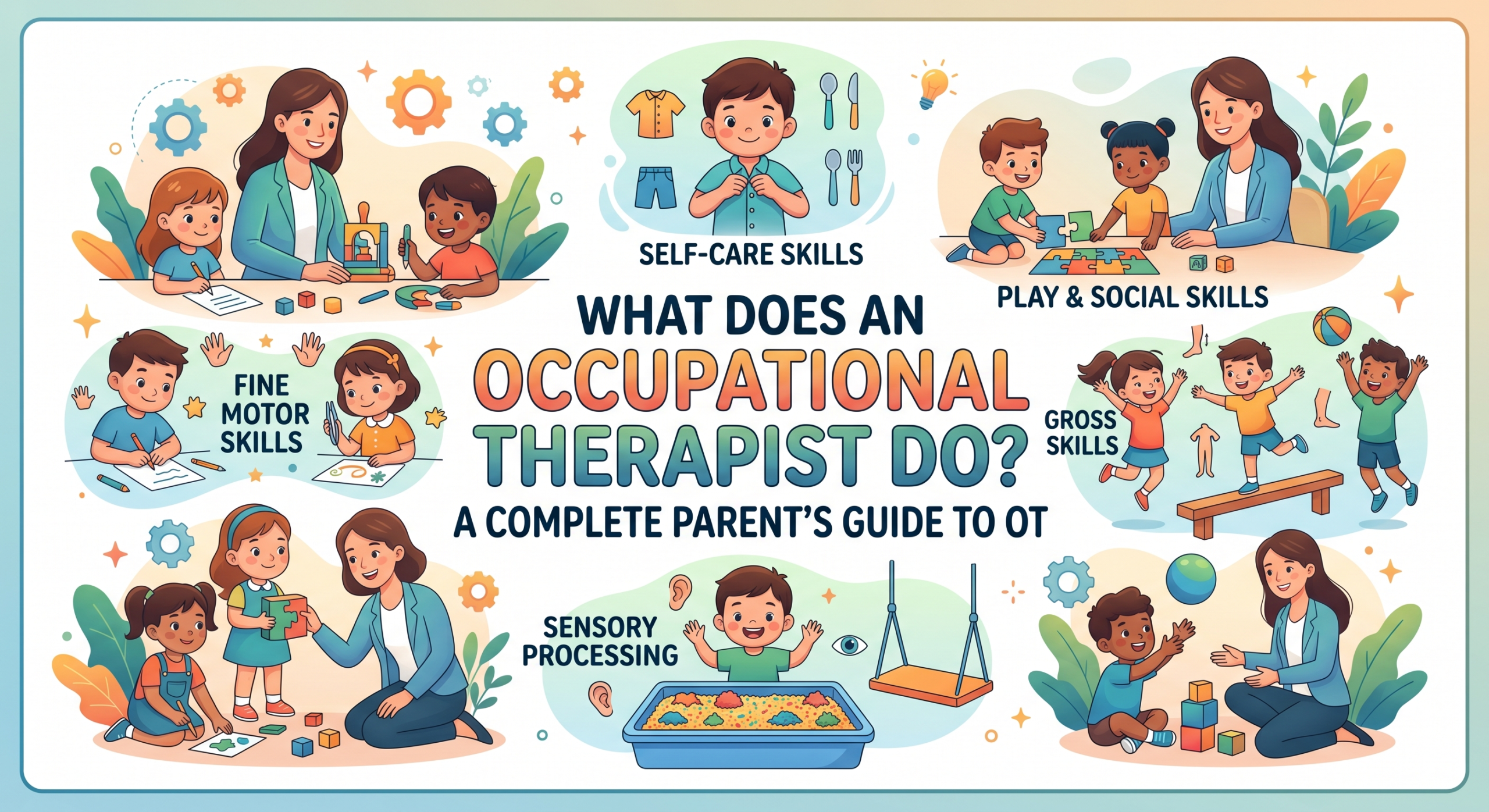
Pediatric Occupational Therapy (OT) is a specialized medical field that helps children develop the skills they need for daily life. To your child, an OT session will just look like fun, structured playtime. But to our trained therapists, every game has a scientific purpose.
Here is what occupational therapy targets:
Hand-Eye Coordination: We use puzzles, blocks, and drawing to help the brain and hands work together smoothly.
Everyday Independence: We teach children how to brush their teeth, dress themselves, and eat with utensils without getting frustrated.
Emotional Regulation: We help children learn how to calm themselves down when they feel angry, overwhelmed, or upset.
Comprehensive Care at Percept Rehabilitation Center
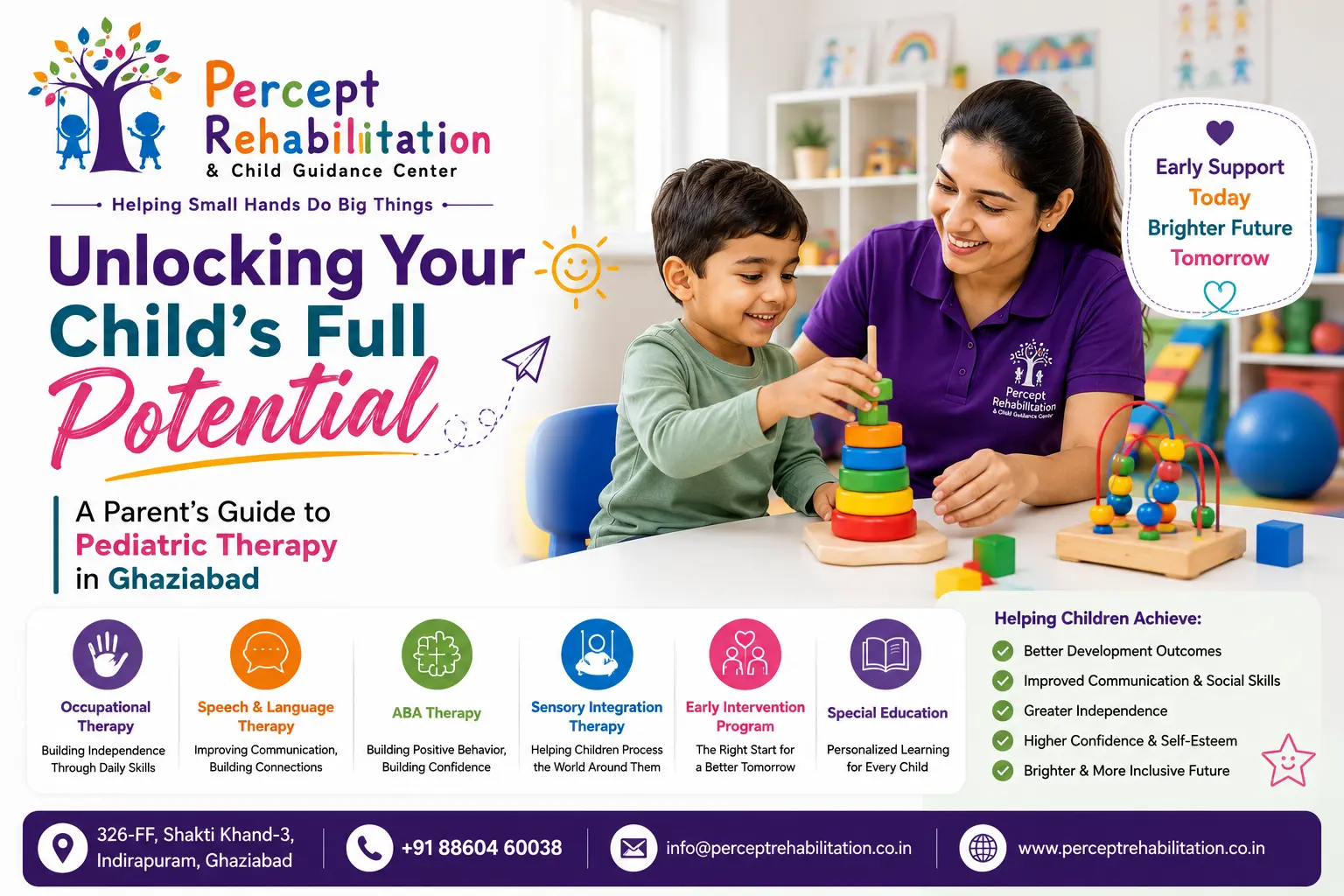
Because every child is totally unique, a “one-size-fits-all” approach does not work in therapy. That is why Percept Rehabilitation Center offers a complete range of services under one roof in Indirapuram, Ghaziabad.
1. Sensory Integration Therapy
Does your child cover their ears when the vacuum is on? Do they refuse to wear clothes with tags? Or maybe they constantly crash into furniture because they crave deep physical pressure? This is called a sensory processing issue.
Our clinic has a specialized sensory gym filled with swings, trampolines, and soft crash pads. Sensory Integration Therapy uses these tools to gently train your child’s brain to handle different sights, sounds, and movements without panicking.
2. Speech and Language Therapy
Communication is the key to connecting with others. Our speech therapists help kids who stutter, struggle to pronounce letters, or have trouble putting their thoughts into sentences. For children who do not speak yet, we teach them how to use sign language or special communication devices so they can finally express what they need.
3. Applied Behavior Analysis (ABA) Therapy
ABA is widely considered the best standard of care for autism. It is a reward-based system that helps children build positive habits—like making friends and communicating clearly—while reducing behaviors that might hold them back or keep them from learning.
4. Special Education
Some children need a little extra time and a different teaching style to grasp reading, writing, and math. Our special education programs are built to match your child’s specific learning speed, helping them gain confidence before they step into a traditional classroom.
Why You Shouldn’t “Wait and See”
If you notice your child falling behind, friends or family might tell you, “Don’t worry, they will grow out of it.” But doctors highly discourage the “wait and see” approach.
During the first three years of life, a child’s brain is like a sponge. It grows faster than it ever will again, forming thousands of new connections every second. This means a young brain is highly flexible.
When you start Early Intervention (therapy before the age of three), you take advantage of this brain flexibility. Kids who start therapy early can reach their goals up to 75% faster than kids who start after they turn five. Early help prevents minor delays from turning into major roadblocks when it is time to start kindergarten.
Bringing Therapy Home
The best therapy doesn’t end when you leave our clinic. The secret to fast progress is practicing at home. At Percept, we consider parents our most important team members.
We Teach You: Our therapists will show you simple games and exercises you can do in your living room to build your child’s strength and focus.
Stay Updated: Through our secure Patient Login on our website, you can always check your therapist’s notes and track how much your child is improving.
Build Routines: We will help you create morning and bedtime routines that make your child feel safe and organized.
Ready to Help Your Child Succeed?
Parenting a child with developmental delays can feel like a heavy responsibility, but you do not have to figure it all out on your own.
With the right therapy, your child can learn to overcome their challenges, do better in school, and build true self-confidence. The team of licensed, expert therapists at Percept Rehabilitation Center is ready to guide you every step of the way.
Do not wait for your child to simply “catch up.” Give them the tools they need to thrive today.
Connect with the best pediatric therapy center in Ghaziabad:
Book Online: Visit perceptrehabilitation.co.in to schedule an appointment.
Call Us: +91 88604 60038
Email Us: info@perceptrehabilitation.co.in
Visit the Clinic: 326-FF, Shakti Khand-3, Indirapuram, Ghaziabad (Open MON – SAT: 09:00 AM – 08:00 PM)
Let’s work together to build a brighter, more independent future for your child.