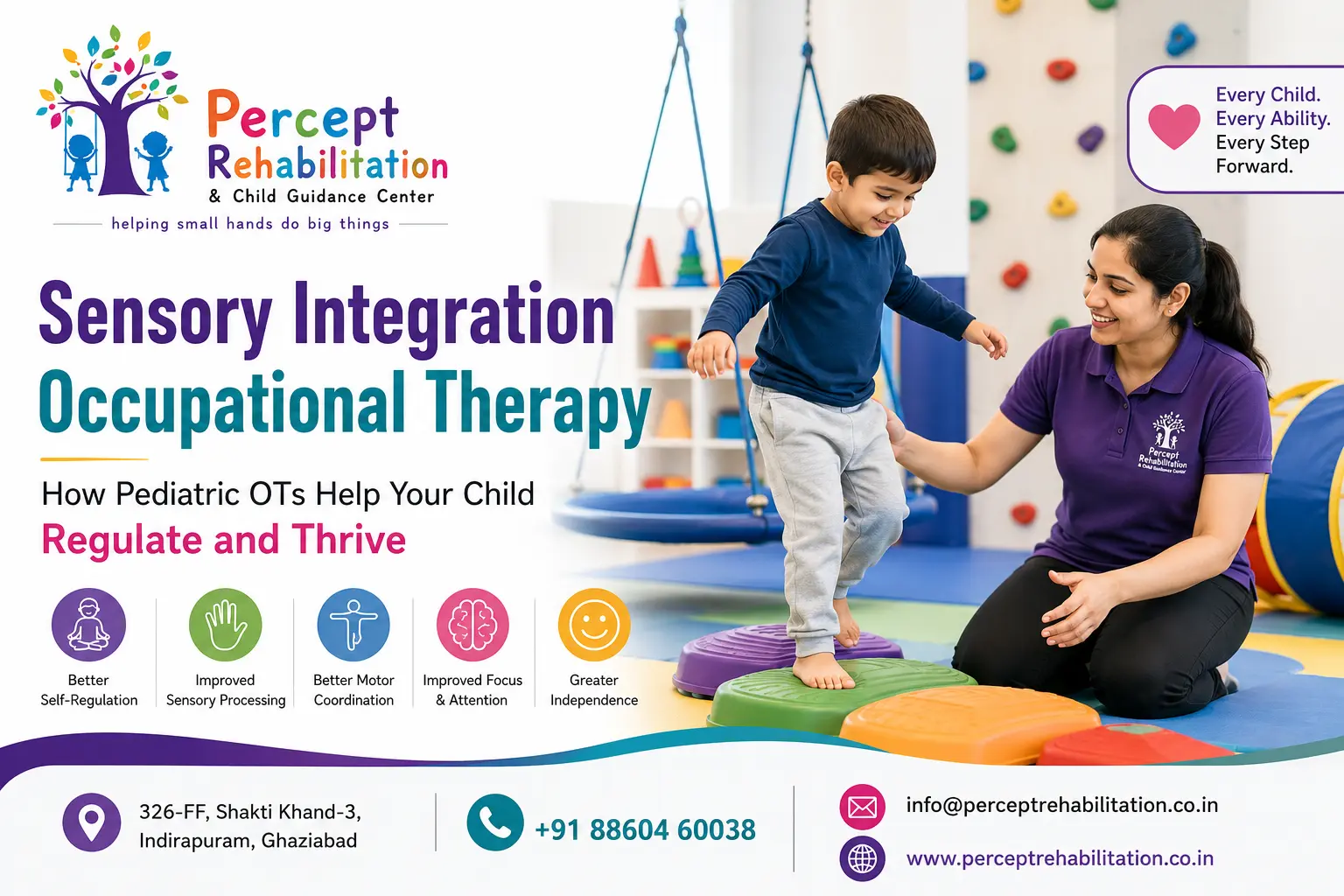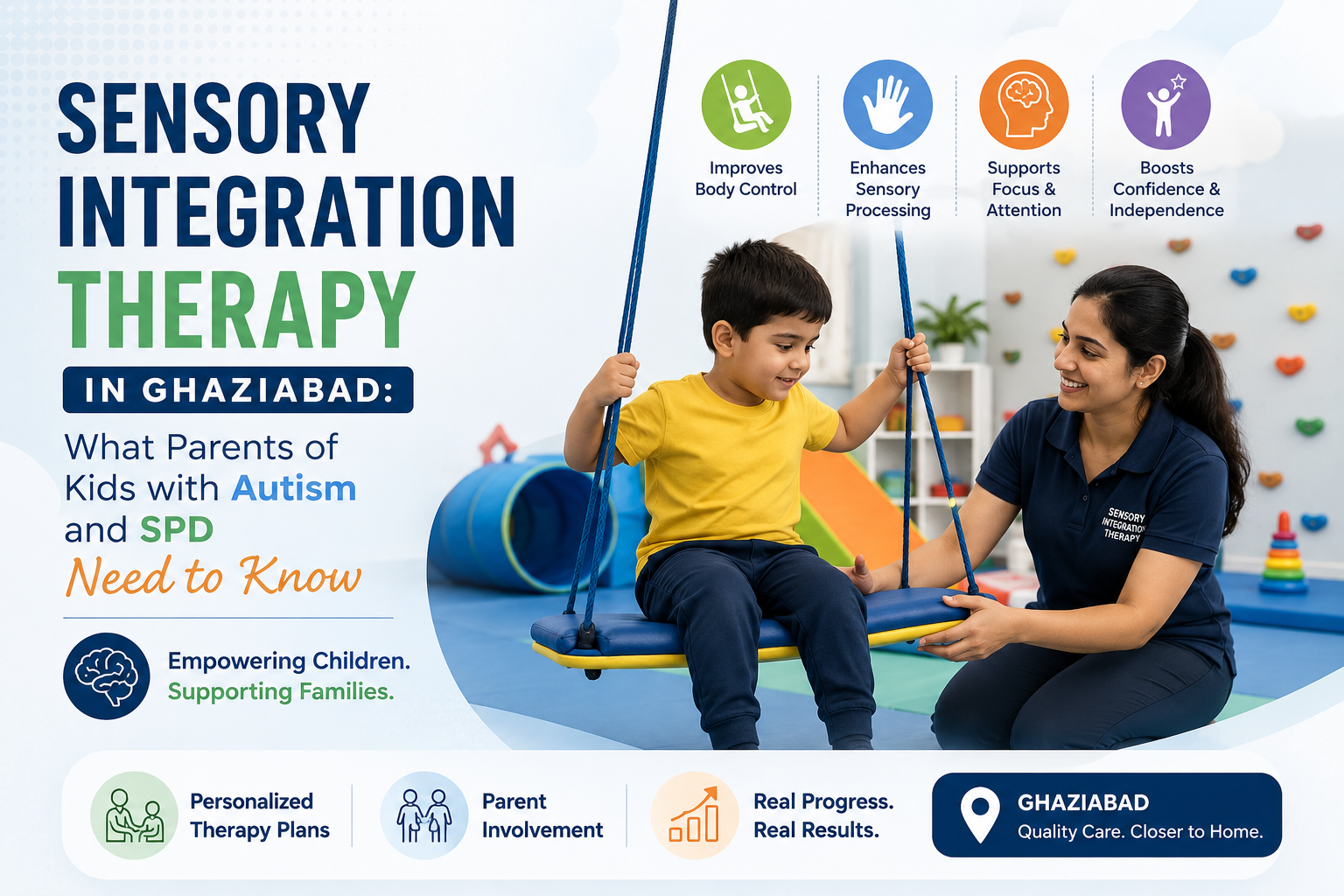
Your child melts down over tags in shirts. Refuses to eat anything that isn’t beige. Covers their ears at birthday parties. Crashes into furniture like they can’t feel it. The pediatrician says “it’s just a phase,” but you know better — this isn’t typical toddler behavior anymore.
If that sounds familiar, you’ve probably stumbled across the term sensory integration therapy. Maybe a friend mentioned it. Maybe your child’s therapist brought it up. And now you’re trying to figure out: what is it, does my child need it, and where do I even find proper sensory integration therapy in Ghaziabad?
This guide answers those questions — clearly, honestly, and without the jargon overload.
What Is Sensory Integration Therapy?
Let’s start simple. Every child’s brain processes sensory input — touch, sound, taste, smell, movement, body position — to make sense of the world. For most kids, this happens automatically. Their brain filters out the hum of the AC, registers when they’re sitting crooked, tolerates the feel of wet grass.
But for kids with Sensory Processing Disorder (SPD) or autism, that automatic filtering doesn’t work right. Their nervous system either overreacts (a light touch feels painful) or underreacts (they don’t notice when they’re hurt). Sometimes both, depending on the sense.
Sensory integration therapy — sometimes called SI therapy — is a specialized form of occupational therapy that helps the brain learn to process sensory information more effectively. It’s structured play, essentially — swings, ball pits, weighted vests, textured materials — designed to “re-train” how the nervous system responds.
It doesn’t cure anything. But it can make daily life bearable — getting dressed without tears, sitting through a meal, tolerating a haircut, making it through school without constant overwhelm.
Signs Your Child Might Need Sensory Integration Therapy
Not every picky eater or active child has sensory issues. But when behaviors start interfering with everyday life — school, family routines, social situations — it’s time to pay attention.
Watch for these patterns:
- Over-responsive (sensory avoider): Refuses certain clothing textures, avoids messy play, covers ears at loud sounds, gags easily at food textures, hates haircuts/nail clipping, distressed by bright lights.
- Under-responsive (sensory seeker): Crashes into things on purpose, chews on shirts/toys constantly, doesn’t notice injuries, seeks intense movement (spinning, jumping), touches everything, has high pain tolerance.
- Poor body awareness: Clumsy, bumps into people/furniture, doesn’t know where their body is in space, struggles with stairs or physical games.
- Difficulty with transitions: Massive meltdowns when routines change, rigidity around sensory experiences, extreme reactions to minor changes.
- Attention and focus issues: Can’t sit still because their body’s constantly seeking input, or shuts down because they’re overwhelmed by classroom noise and movement.
Many children with autism also have sensory processing challenges, which is why sensory integration therapy is often a core part of autism intervention programs.
How Does Sensory Integration Therapy Actually Work?
Here’s what confuses parents: SI therapy doesn’t look like therapy. There’s no desk, no worksheets. It looks like a child playing in a room full of swings, crash mats, trampolines, and bins of rice.
But it’s not random play. Every activity is chosen specifically to challenge the child’s sensory system in a safe, controlled way. The goal is to push them just slightly outside their comfort zone — not traumatize, but expose and adapt.
A typical SI therapy session might include:
- Vestibular input (movement): Swinging, spinning, rolling, rocking — helps regulate the inner ear system responsible for balance and spatial orientation.
- Proprioceptive input (body awareness): Pushing/pulling heavy objects, climbing, jumping into crash pits, wearing weighted vests — helps the brain understand where the body is.
- Tactile input (touch): Playing with textures (sand, slime, rice, foam), brushing protocols, messy play — desensitizes over-responsive kids or wakes up under-responsive ones.
- Oral-motor activities: Blowing bubbles, chewing chewy tubes, exploring different food textures — for kids with feeding difficulties.
- Calming or alerting strategies: Deep pressure, compression, or high-energy movement — depending on whether the child needs to be regulated up or down.
At Percept Rehabilitation Center, our therapists are trained in Ayres Sensory Integration — the gold-standard approach. That means your child’s program isn’t guesswork; it’s based on a formal sensory assessment and adjusted weekly based on response.
Sensory Integration Therapy vs. Regular Occupational Therapy
Parents often ask: isn’t this just occupational therapy?
Yes and no. SI therapy is a specialization within occupational therapy. Not every OT is trained in sensory integration. Some focus on fine motor skills, some on ADLs (activities of daily living), some on handwriting.
If your child’s primary struggle is sensory-based — meltdowns triggered by sensory input, inability to regulate their body, extreme sensitivities — you need an OT with SI certification. Ask directly. “Are your therapists trained in Ayres Sensory Integration?” is a fair question.
What Conditions Benefit from Sensory Integration Therapy?
While we work with all kinds of kids, SI therapy is most commonly recommended for:
- Autism Spectrum Disorder (ASD) — especially when sensory sensitivities interfere with learning, social interaction, or daily routines.
- ADHD — to help with focus, impulse control, and body regulation.
- Sensory Processing Disorder (SPD) — the primary diagnosis when sensory issues exist without autism or other conditions.
- Developmental delays — when a child’s sensory struggles are slowing down motor or cognitive milestones.
- Anxiety and behavioral issues — many “behavior problems” are actually sensory overwhelm in disguise.
If your child has been diagnosed with any of these, or if you’re still waiting on a formal assessment, sensory integration therapy can often begin immediately. You don’t need a diagnosis to start — you just need behaviors that are getting in the way.
How Long Does Sensory Integration Therapy Take?
There’s no fixed timeline. Some kids show noticeable improvement in 8 to 12 weeks. Others need consistent therapy for a year or more. It depends on severity, age, and how much support happens at home.
What we tell parents: SI therapy works best when it’s paired with what we call a “sensory diet” at home — specific activities built into your child’s day (jumping on a trampoline before school, wearing a weighted backpack, chewing gum during homework) that keep their nervous system regulated between therapy sessions.
The therapist will teach you these strategies. The more you use them, the faster progress happens.
Finding Sensory Integration Therapy in Ghaziabad, Noida, and NCR
If you’re searching for sensory integration therapy in Ghaziabad, here’s what to look for:
- Therapists with formal SI training — certifications from USC, CLASI, or equivalent Ayres SI programs. This isn’t a weekend workshop skill.
- Proper sensory gym equipment — suspended swings, crash mats, climbing structures, ball pits, varied textures. SI therapy can’t happen in a regular clinic room.
- Individualized treatment plans — based on formal sensory assessments (SPM, Sensory Profile), not generic “sensory activities.”
- Parent involvement — you should be learning strategies to use at home, not just dropping your child off.
- Regular progress reviews — reassessments every 8-12 weeks to adjust the plan as your child’s nervous system adapts.
We serve families from across Ghaziabad, Indirapuram, Vaishali, Vasundhara, Noida, and Crossings Republik. Our sensory gym is fully equipped, our therapists are SI-certified, and we work closely with families to make sure therapy doesn’t just happen in our clinic — it happens in your life.
What If My Child Refuses to Participate?
This is one of the most common worries. “My child won’t cooperate. They hate new places. They’ll scream the whole time.”
Here’s the thing: SI therapists are trained to work with children who are dysregulated, anxious, and resistant. The first few sessions aren’t about “doing therapy.” They’re about building trust, letting your child explore at their own pace, and figuring out what their nervous system needs.
Some kids take weeks to warm up. That’s okay. Good SI therapy meets the child where they are — not where the therapist wishes they were.
Ready to Take the First Step?
If you think your child might benefit from sensory integration therapy, the best thing you can do is get a proper assessment. No guessing, no Dr. Google — just a trained professional watching how your child moves, plays, and reacts, then building a plan from there.
You can book a sensory assessment online or call us at +91 88604 60038. We’ll talk through what you’re seeing at home, answer your questions, and let you know honestly whether SI therapy is the right fit.
You’ve been managing meltdowns, navigating school complaints, and second-guessing yourself for long enough. Let’s figure out what your child’s nervous system actually needs — and give you a plan that works.
About Percept Rehabilitation Center: We specialize in sensory integration therapy, occupational therapy, speech therapy, ABA therapy, and early intervention for children with autism, ADHD, sensory processing disorder, and developmental delays. Our center in Indirapuram, Ghaziabad serves families across Delhi NCR including Noida, Vaishali, Vasundhara, and Crossings Republik.
📍 326-FF, Shakti Khand-3, Indirapuram, Ghaziabad
📞 +91 88604 60038
✉️ info@perceptrehabilitation.co.in
🕒 Mon–Sat: 9:00 AM – 8:00 PM
🌐 https://perceptrehabilitation.co.in/
Related Services: