Mr. Sharma was 58 when the stroke took his right side. Three months in a hospital bed, two more in a wheelchair. By the time his family brought him to us, he’d stopped trying to feed himself. Not because he couldn’t — but because spilling dal on his shirt every day had broken something inside him.
Six months later, he buttoned his own kurta for his granddaughter’s mundan ceremony. He cried. His wife cried. Honestly, his therapist cried a little too.
This is what occupational therapy in Ghaziabad does for adults. It’s not glamorous. There are no miracle cures. But day by day, task by task, it gives people their lives back — and most families have no idea it even exists until they desperately need it.
What Is Adult Occupational Therapy?
Most people in India hear “occupational therapy” and assume it’s either physiotherapy by another name, or something for children with autism. It’s neither.
Adult occupational therapy (OT) helps people regain the ability to do the everyday things illness or injury has taken from them — bathing, cooking, getting dressed, holding a cup, climbing stairs, going back to work. While a physiotherapist focuses on strength and mobility in isolation, an occupational therapist focuses on putting that strength to use in real life. Can you actually pick up your grandchild? Can you actually drive to the market?
Think of it this way: physio gets your arm moving again. OT teaches your arm how to brush your teeth.
Who Needs Occupational Therapy as an Adult?
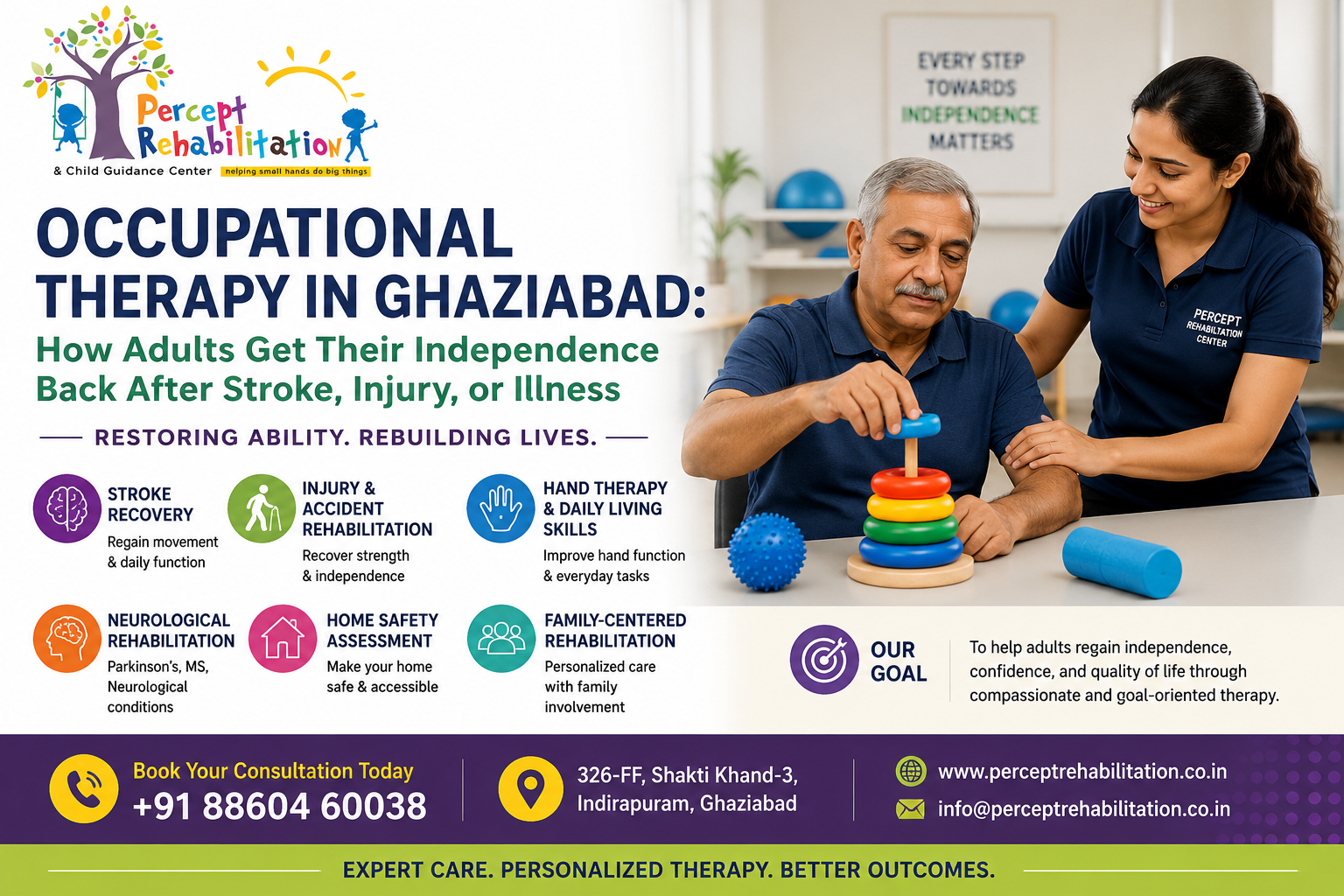
- Stroke survivors — relearning how to use a weakened side, regaining hand function, re-training the brain to coordinate basic movements.
- People recovering from accidents — road traffic injuries, falls, fractures, head injuries.
- Patients with Parkinson’s disease — managing tremors, preventing falls, adapting daily routines.
- Adults with arthritis — protecting joints and finding pain-free ways to do everyday tasks.
- Multiple sclerosis and neurological conditions — conserving energy and maintaining independence.
- Post-surgery patients — hand surgeries, hip replacements, spinal surgeries.
- Mental health conditions — depression, anxiety, schizophrenia.
- Elderly adults — fall prevention and dementia care support.
What Happens in an Adult OT Session?
- Activities of Daily Living (ADL) training — practicing eating, bathing, grooming, and dressing.
- Hand therapy and fine motor work — rebuilding grip, dexterity, and coordination.
- Cognitive rehabilitation — memory exercises and attention training.
- Home and workplace assessment — identifying hazards and recommending changes.
- Assistive device training — walkers, splints, wheelchairs, and modified tools.
- Energy conservation techniques — for chronic fatigue conditions.
- Return-to-work planning — rebuilding job-specific skills.
Learn more about our rehabilitation programs at Percept Rehabilitation Center.
Stroke Rehabilitation: Where Time Matters Most
The first 3 to 6 months after a stroke are called the golden window — the period when the brain is most capable of rewiring itself.
- Regaining the use of a weakened arm or hand
- Learning to dress, eat, and bathe independently
- Improving balance and preventing falls
- Managing emotional changes and confidence loss
- Home modification for safe movement
Why Choose a Specialized Rehabilitation Center?
- Licensed occupational therapists
- Proper assessment before therapy planning
- Equipment for adult rehabilitation
- Family involvement in therapy
- Clear progress tracking and re-assessment
How Long Does Adult OT Take?
- Stroke recovery: 6 months to 2 years
- Post-surgical hand rehab: 6 to 16 weeks
- Parkinson’s & progressive conditions: ongoing therapy
- Accident recovery: 3 to 12 months
Ready to Start the Conversation?
If someone in your family is recovering from a stroke, accident, surgery, or neurological condition — don’t wait.
📍 326-FF, Shakti Khand-3, Indirapuram, Ghaziabad
📞 +91 88604 60038
✉️ info@perceptrehabilitation.co.in