Does your toddler scream at the sound of the mixer, refuse to wear anything but one soft T-shirt, or crash into furniture as if they can’t feel it? These can be signs of sensory processing difficulties.
Every toddler has quirks. But when sensory reactions are intense, frequent and get in the way of daily life, it’s worth understanding what might be going on. Here are the most common sensory processing disorder signs, and what you can do.
What is sensory processing?
Sensory processing is how the brain receives, organises and responds to information from the senses. That includes the five familiar senses plus three less-known ones:
- Vestibular: the sense of movement and balance, from the inner ear.
- Proprioception: the sense of where the body is and how hard muscles are working.
- Interoception: internal signals like hunger, thirst and needing the toilet.
When the brain processes these signals well, children feel calm and in control. When it doesn’t, everyday sensations can feel overwhelming, or barely noticeable.
Sensory processing disorder (SPD) isn’t a separate formal diagnosis in major diagnostic manuals. But the difficulties are real and well recognised by occupational therapists, and they are common in children with autism and ADHD. For a deeper explanation, read our guide to sensory integration therapy.
Signs of sensory over-responsiveness
Some toddlers feel sensations too strongly. They may:
- Cover their ears at everyday sounds like pressure cookers, hand dryers or traffic.
- Refuse certain clothes, labels or socks.
- Hate haircuts, nail-cutting, tooth brushing or face washing.
- Gag on or refuse many food textures.
- Avoid messy play like sand, paint or playdough.
- Dislike being hugged or touched unexpectedly.
- Become distressed in crowded or noisy places, like malls or weddings.
Signs of sensory under-responsiveness
Other toddlers barely notice sensations. They may:
- Not react to falls, bumps or even injuries.
- Seem not to hear their name.
- Appear tired, slow to get going, or “switched off”.
- Not notice a dirty face or runny nose.
Signs of sensory seeking
Some toddlers crave more input. They may:
- Constantly jump, spin, climb or crash into things.
- Chew on clothes, toys or non-food items.
- Touch everything and everyone.
- Love rough play and never seem to get dizzy.
Many children show a mix of these patterns. We explore the difference in more depth in our next post on sensory seeking vs sensory avoiding.
Signs linked to movement and coordination
- Poor balance or frequent falls.
- Fear of swings, slides or having feet off the ground.
- Clumsy movements, or difficulty learning new motor skills.
- Walking on tiptoes.
When to seek help
Consider an assessment if sensory reactions:
- Happen often and are intense.
- Cause daily battles over dressing, eating, bathing or sleep.
- Stop your child from joining in play, playschool or family events.
- Come with other delays, such as speech, motor or social skills.
Our age-by-age signs your child needs occupational therapy covers related signs.
How sensory integration therapy helps
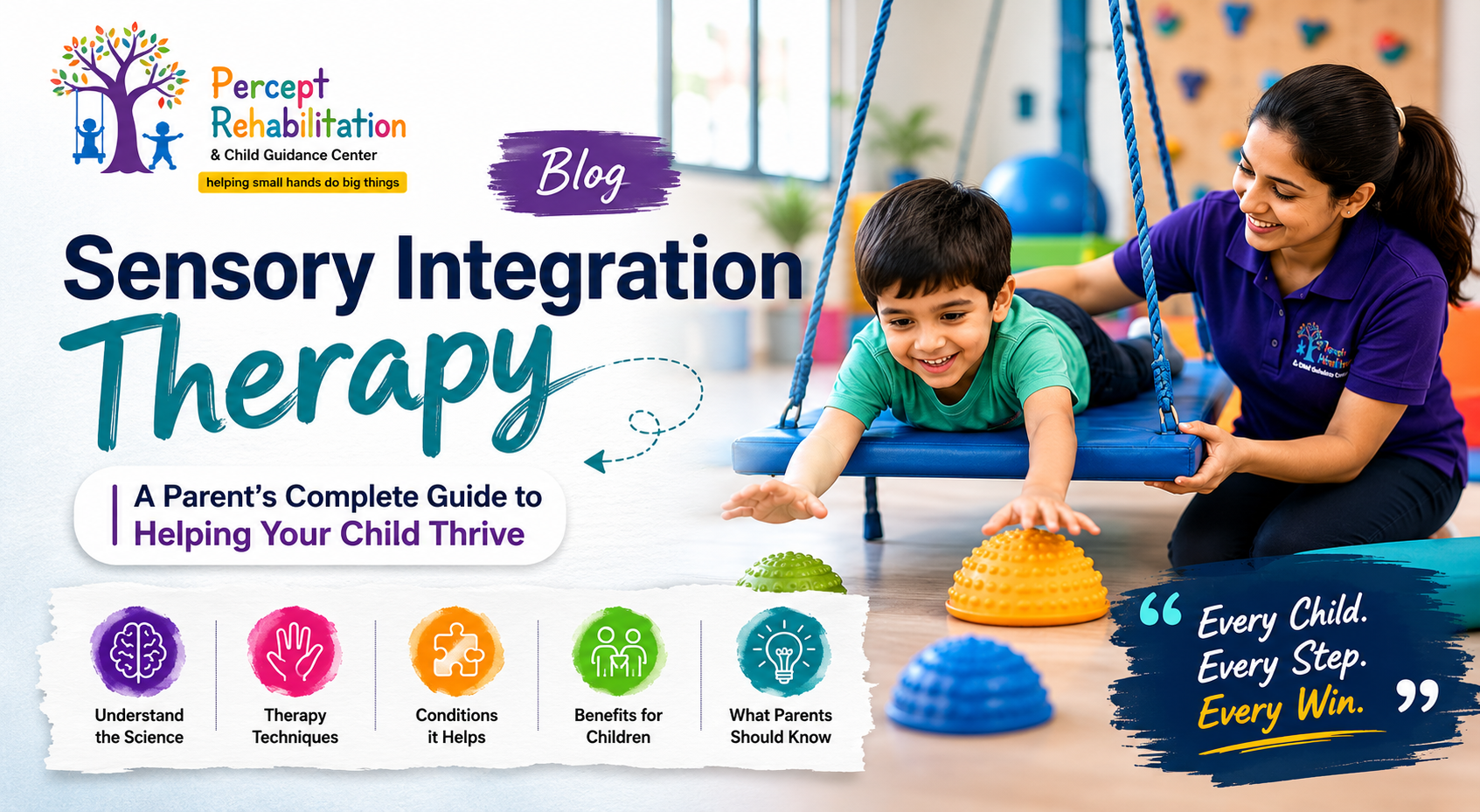
An occupational therapist trained in sensory integration assesses how your child processes each type of sensation. Therapy then uses carefully planned play, such as swinging, climbing, deep pressure and tactile games, to help the nervous system respond more comfortably. Parents learn strategies to use at home too.
Sensory integration therapy at Percept
Our fully equipped sensory gym in Indirapuram is designed for exactly this kind of therapy. Every child starts with an assessment, and plans are built around the daily challenges that matter most to your family.
CTA: Book an assessment for sensory integration therapy in Ghaziabad. Call +91 88604 60038 or message us on WhatsApp.
Frequently asked questions
Is sensory processing disorder a sign of autism?
Sensory difficulties are very common in autistic children, but many children with sensory difficulties are not autistic. An assessment helps clarify what’s going on.
At what age can sensory processing issues be identified?
Signs can appear in infancy, but they often become clearer between 2 and 4 years, when children face more varied sensory experiences.
Will my toddler grow out of sensory issues?
Some mild sensitivities fade with age. Intense difficulties often continue without support, but they respond well to therapy.
How is sensory processing disorder diagnosed?
An occupational therapist assesses sensory processing using standardised questionnaires, observation and play. There isn’t a blood test or scan for it.
What can I do at home for my child’s sensory issues?
Notice triggers, prepare your child before sensory-heavy events, and offer calming input like deep-pressure hugs. A therapist can build a personalised sensory diet.