Every parent watches their child grow with a mix of pride and quiet worry. Are they crawling on time? Why does writing feel so hard for them? Why do mealtimes or mornings turn into a battle? Child development unfolds at its own pace, and a little variation is completely normal. But sometimes a child needs a helping hand to build the everyday skills that come more easily to others – and that is exactly what child development therapy, and pediatric occupational therapy in particular, is designed to provide.
This article walks you through the signs that your child may benefit from pediatric OT, what therapy actually involves, and when to seek help. For a broader introduction, our parent’s guide to pediatric occupational therapy is a useful companion read.
What is child development therapy?
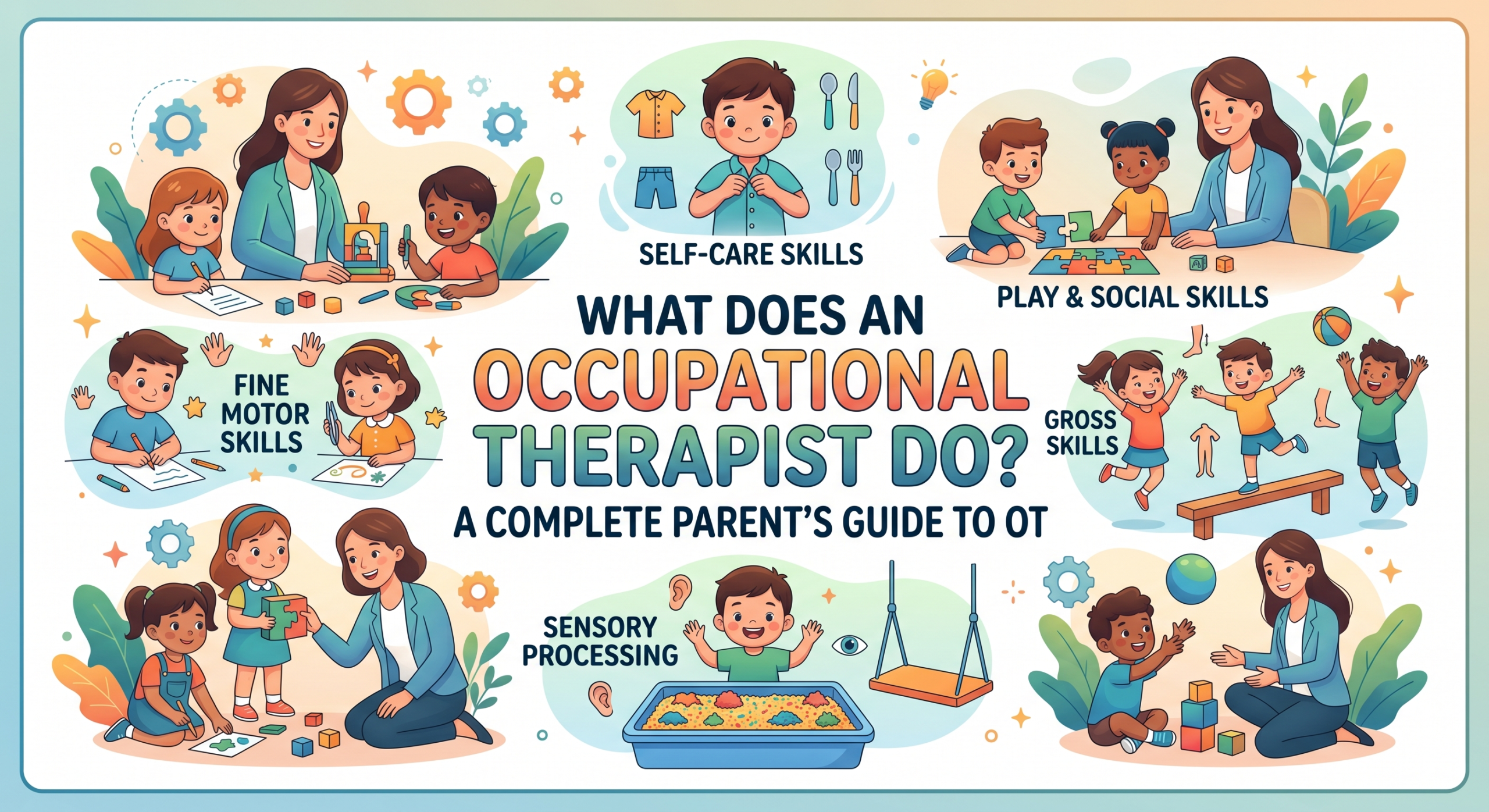
Child development therapy is an umbrella term for the supports that help children build the physical, cognitive, sensory, social and emotional skills they need to thrive at home, at school and at play. Pediatric occupational therapy is one of the most important pieces of that picture. It focuses on the practical, everyday “occupations” of childhood – playing, learning, dressing, eating, writing and making friends – and strengthens the underlying skills that make those activities possible.
At Percept, pediatric occupational therapy is delivered through purposeful play. A child climbing, swinging, threading beads or completing an obstacle course is also building balance, hand strength, coordination, attention and self-regulation – all without it feeling like “work.”
Developmental milestones: a quick reference
Milestones are guideposts, not deadlines. They help you notice when a child may need extra support. As a rough guide, look for steady progress in these areas:
- Motor skills: rolling, sitting, crawling, walking, running, and later, holding a crayon or using cutlery
- Fine motor and hand skills: grasping, stacking, scribbling, drawing shapes, and eventually writing
- Self-care: feeding, dressing, toileting and grooming with growing independence
- Communication and social play: babbling, first words, sharing, turn-taking and pretend play
- Attention and regulation: managing emotions, following simple instructions and coping with change
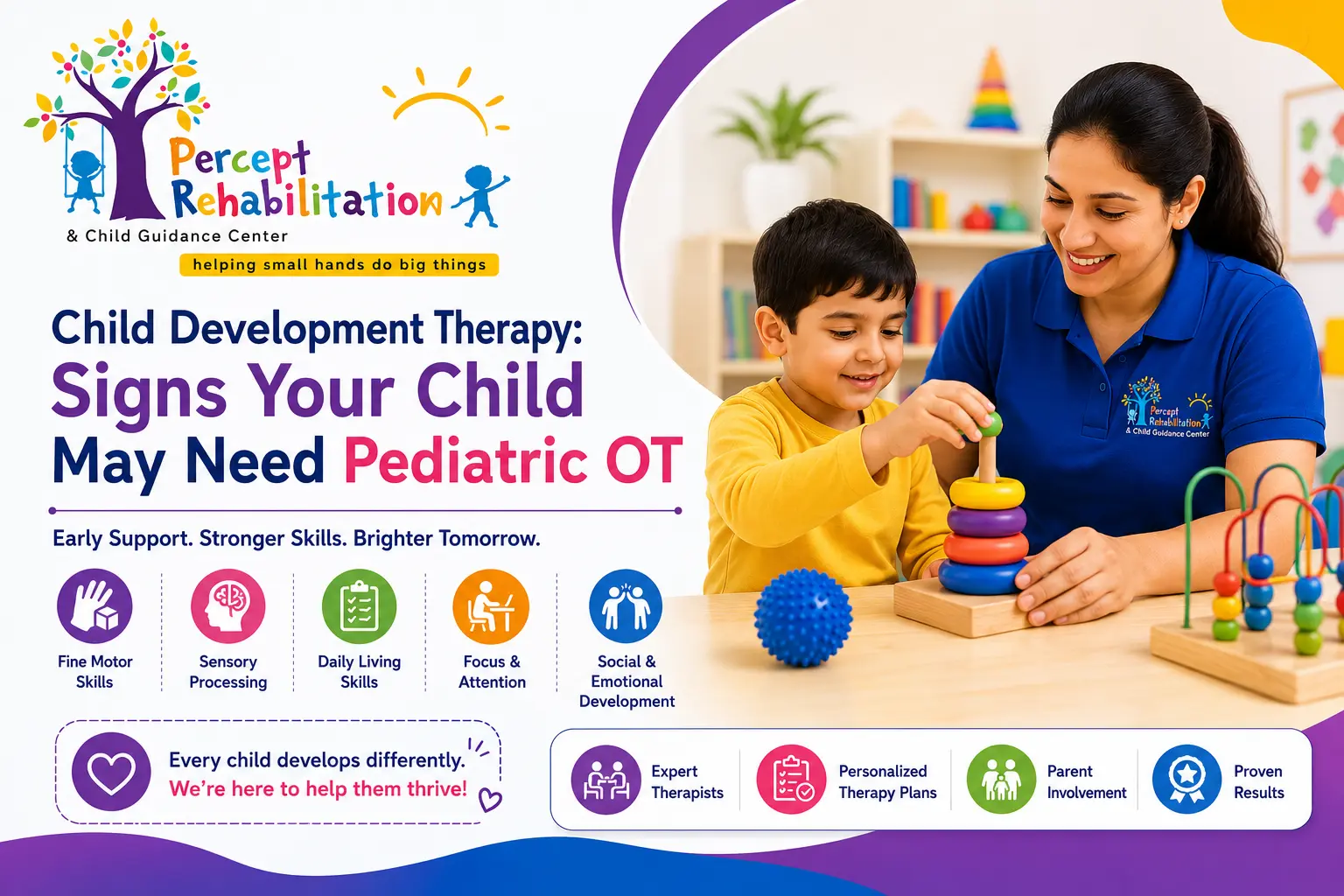
Signs your child may benefit from pediatric OT
Consider an assessment if, over time, you notice several of the following:
Motor and coordination signs
- Clumsiness, frequent falls, or trouble with stairs, balls and playground equipment
- Weak hand strength, an awkward pencil grip, or difficulty with scissors, buttons and laces
- Messy or laboured handwriting that does not improve with practice
Sensory signs
- Strong reactions to noise, light, textures, clothing tags or food – our article on signs of sensory processing disorder explains these in depth
- Constant movement, crashing into things, or seeking intense sensory input
Daily-living and behaviour signs
- Difficulty with everyday routines such as dressing, eating and grooming – see why ADL skills matter for children with delays
- Meltdowns around transitions, or trouble settling and following routines
- Struggling to keep up with classroom demands or to sit and attend
If you are unsure whether these add up to a concern, our guide on when to seek an occupational therapy ADL assessment can help you decide.
What happens in pediatric occupational therapy?
Therapy always begins with an assessment of your child’s strengths and challenges. The therapist then sets goals with you and builds a personalised, play-based plan. Sessions may blend OT with sensory integration therapy, handwriting intervention, ADL and life-skill training or a school-readiness programme depending on what your child needs. Crucially, parents are coached to continue the work at home, where most of a child’s learning happens.
Because children’s needs often overlap, Percept also offers speech and language therapy, early intervention and group therapies, so care can be coordinated across the team. If sensory difficulties are part of the picture, our sensory integration therapy checklist for parents is a helpful next read.
Families travel to our Indirapuram clinic from across Noida and the wider NCR. If you are comparing your options, our overview of occupational therapy near Noida and Indirapuram explains how to choose the right OT for your child.
Child development therapy and school readiness
One of the most common reasons parents seek pediatric OT is school. A child may be bright and curious yet struggle to sit still, hold a pencil, follow group instructions, or cope with the noise and bustle of a classroom. These are not “behaviour problems” – they are skill gaps that the right therapy can close.
Pediatric occupational therapy builds the fine-motor control, attention, organisation and self-regulation that underpin learning, while a focused school-readiness programme prepares children for the specific demands of the classroom.
Brain-based activities can help here too. Our article on why brain gym supports early literacy and numeracy explains how movement and coordination exercises strengthen the cognitive foundations of reading and maths. Children who struggle socially may also benefit from group therapy that helps with stress and emotions, which builds confidence alongside their peers.
Why early support matters
Young brains are remarkably adaptable – a quality scientists call neuroplasticity. The earlier a child receives the right support, the more readily new skills take hold, building confidence before gaps widen or frustration sets in.
Early help can also prevent secondary problems: a child who finds writing painful may start avoiding all schoolwork, and a child overwhelmed by sensory input may withdraw from play. Addressing the root skill early keeps these knock-on effects from taking root.
It is worth saying clearly: seeking therapy is not a sign that anything is “wrong” with your child, or a reflection of your parenting. Every child develops differently, and giving them targeted tools to thrive is one of the most supportive things a parent can do.
Frequently asked questions about child development therapy
At what age can a child start occupational therapy?
Children can benefit from OT and early intervention from infancy through the teenage years. The right time to start is whenever you notice persistent difficulties – earlier is generally better.
Is pediatric OT the same as physiotherapy?
They overlap but differ. Physiotherapy focuses mainly on movement, strength and gross motor function, while pediatric OT focuses on participation in daily activities – play, self-care, fine motor skills and sensory regulation. Percept offers both occupational therapy and physiotherapy.
How do I get started?
Book an assessment. Our guide to what to expect at an OT appointment explains exactly how the first visit works.
Book an Occupational Therapy Appointment in Indirapuram (Near Noida)
Concerned about your child’s development? Percept Rehabilitation Centre is a pediatric therapy and child guidance centre in Indirapuram, Ghaziabad, serving families across Indirapuram, Vaishali, Vasundhara, Noida and the wider Delhi-NCR.
You can book an appointment online or simply walk in during clinic hours.
Address: 326-FF, Shakti Khand-3, Indirapuram, Ghaziabad
Phone: +91 88604 60038
Email: info@perceptrehabilitation.co.in
Working hours: Monday to Saturday, 9:00 AM – 8:00 PM. Closed on Sunday.
Explore our full range of pediatric therapy services, read more on the Percept blog, or get in touch with our team to ask which programme is right for your child.