If your child struggles to sit still in class, melts down over a scratchy shirt tag, or can’t seem to catch a ball no matter how many times you practise, you’ve probably heard the phrase “sensory issues.” What often gets left out of that conversation is who actually treats it: a trained pediatric occupational therapist.
Sensory integration occupational therapy is the clinical approach where an occupational therapist (OT) uses sensory-based techniques to help a child’s brain process the world more smoothly—so everyday tasks like getting dressed, sitting at a desk, or playing with friends become easier instead of exhausting.
Here’s what it actually involves and what to look for in a qualified therapist.
What Is Sensory Integration Occupational Therapy?
Occupational therapy, at its core, is about helping children function independently in everyday life—dressing, eating, writing, playing, learning, and socialising.
Sensory Integration Therapy is one of the most widely used frameworks within pediatric occupational therapy. Developed by occupational therapist Dr. A. Jean Ayres, it explains how the brain organises information received through touch, movement, body position, sound, sight, smell, and taste.
When an occupational therapist specialises in sensory integration, they look beyond the visible behaviour—the meltdown, the refusal to wear certain clothes, poor coordination, or difficulty concentrating—and identify the underlying sensory-processing challenges causing those behaviours.
This clinical reasoning is what separates evidence-based sensory integration occupational therapy from generic sensory play activities.
The Occupational Therapist’s Role: Assessment to Treatment
A qualified pediatric occupational therapist never guesses.
Before therapy begins, the OT performs a comprehensive sensory and functional assessment to understand how your child responds to movement, touch, sound, and other sensory input—and how those responses affect daily activities.
During the assessment, the therapist may observe:
- Fine motor skills
- Gross motor coordination
- Balance and posture
- Handwriting readiness
- Attention and focus
- Emotional regulation
- Sensory responses
- Daily living skills
After the evaluation, the therapist develops measurable functional goals that improve your child’s independence rather than focusing only on sensory behaviours.
For example, instead of simply helping a child tolerate swinging, therapy aims to help them:
- Complete morning routines independently
- Sit through classroom activities
- Participate confidently in playground games
- Improve handwriting and classroom performance
- Develop better self-regulation
What Happens During a Sensory Integration OT Session?
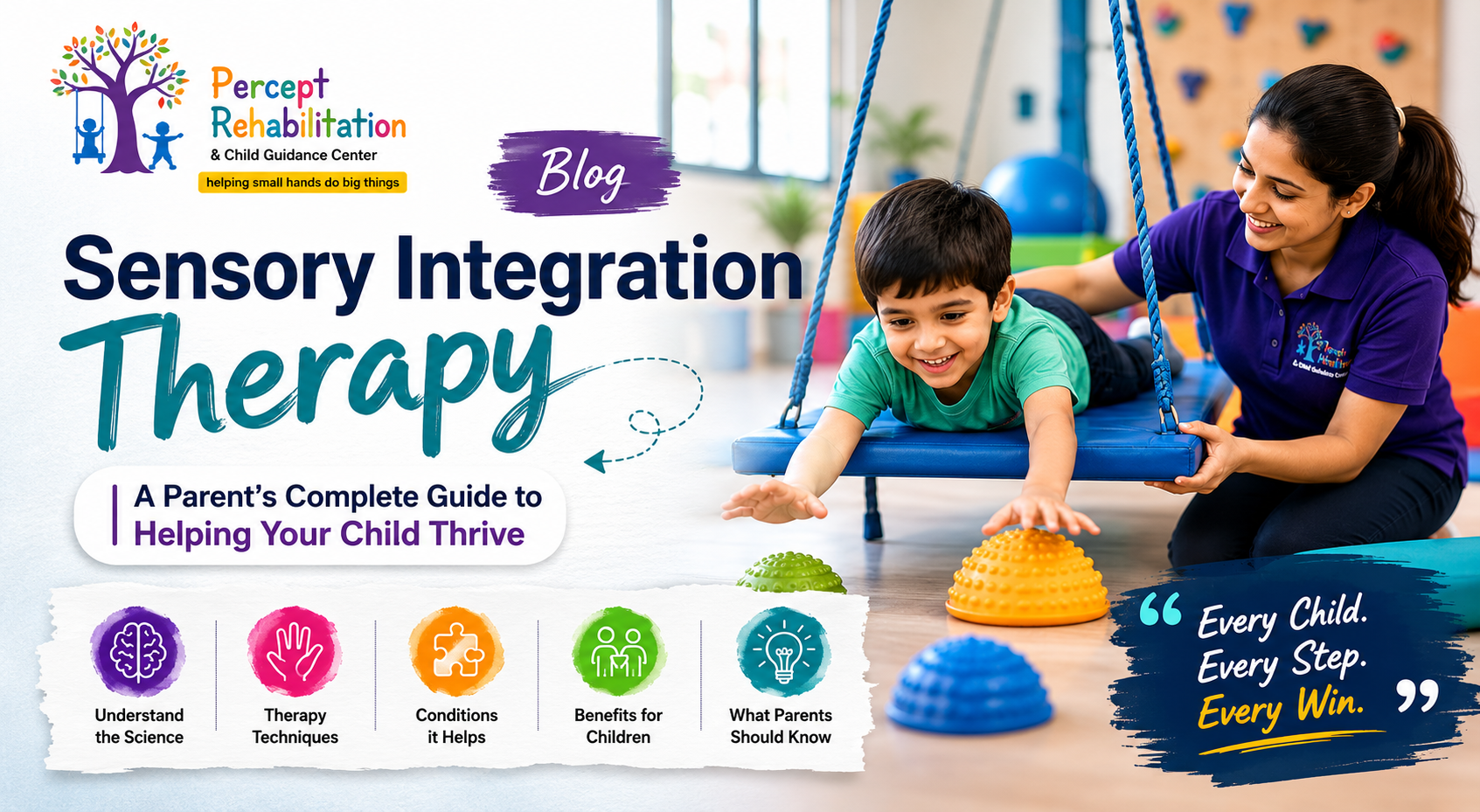
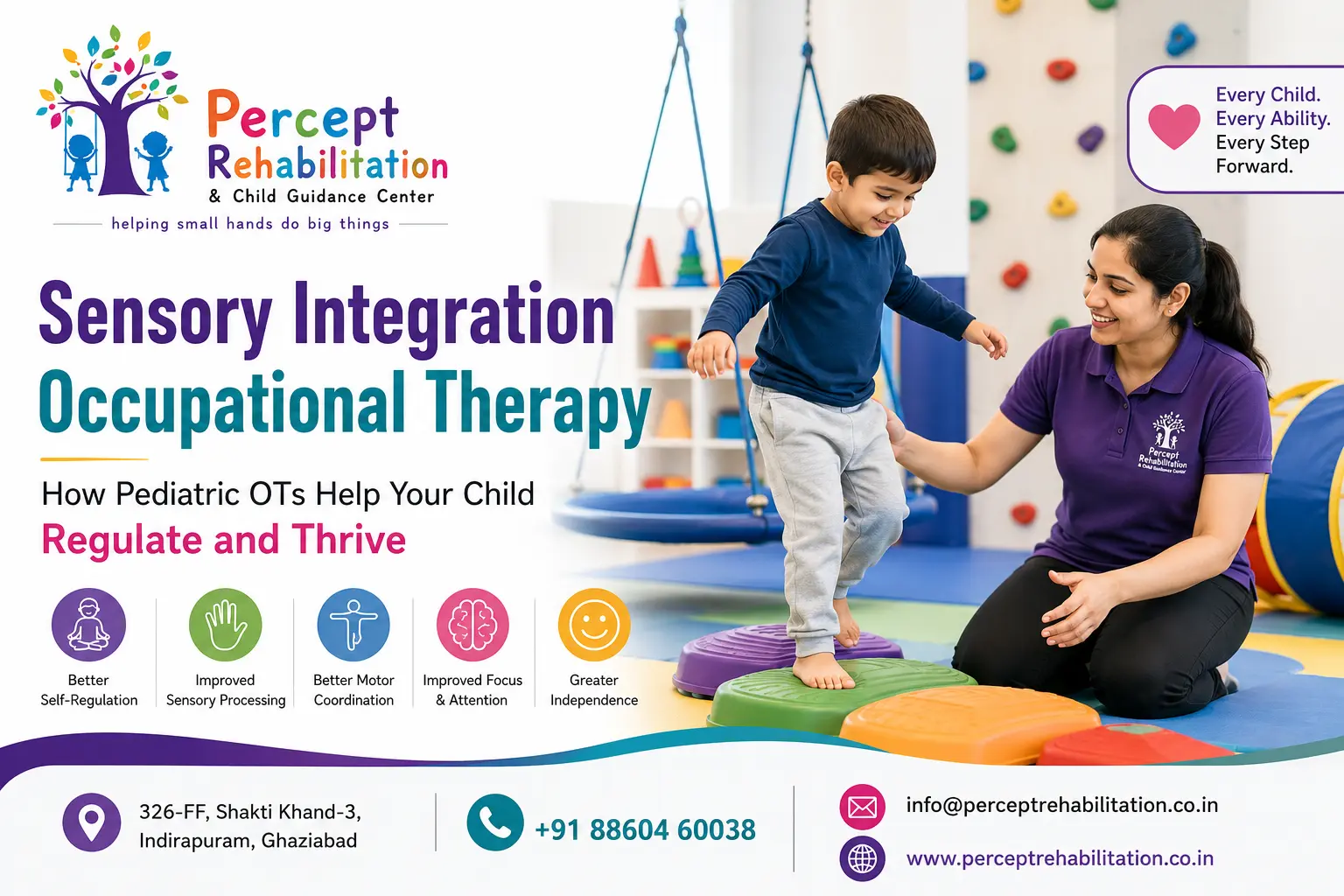
Therapy sessions are designed to feel like play—but every activity is chosen for a specific therapeutic purpose.
A pediatric OT carefully selects activities based on your child’s sensory profile.
Sessions may include:
- Platform swings and suspended equipment to improve vestibular processing
- Obstacle courses to build motor planning and coordination
- Climbing activities for strength and body awareness
- Deep-pressure techniques for calming the nervous system
- Balance exercises
- Tactile activities using sand, textures, putty, and sensory bins
- Fine motor games to improve pencil grip and handwriting
The therapist continually adjusts each activity to provide the “just-right challenge”—enough sensory input to encourage development without overwhelming the child.
Building a Personalized Sensory Diet
Therapy doesn’t stop when your child leaves the clinic.
Your occupational therapist develops a personalized Sensory Diet—a structured plan of sensory activities incorporated into everyday routines at home and school.
Examples include:
- Movement breaks before homework
- Heavy work activities after school
- Deep-pressure activities before bedtime
- Chewy foods during focused tasks
- Classroom sensory strategies
Consistency between home, school, and therapy sessions helps children make lasting progress.
Who Can Benefit?
Sensory Integration Occupational Therapy can help children with:
- Autism Spectrum Disorder (ASD)
- ADHD
- Sensory Processing Disorder (SPD)
- Developmental Delays
- Learning Difficulties
- Dyspraxia and coordination disorders
- Cerebral Palsy
- Motor planning difficulties
Many children also benefit from combining OT with Speech & Language Therapy, ABA Therapy, Special Education, and the Early Intervention Program for comprehensive developmental support.
How to Choose the Right Occupational Therapist
When looking for sensory integration occupational therapy, choose a clinic that offers:
- Licensed and experienced pediatric occupational therapists.
- Comprehensive sensory assessments before treatment.
- Individualized therapy plans.
- Parent coaching and home programs.
- Modern sensory integration equipment.
- A multidisciplinary team under one roof.
Why Families Choose Percept Rehabilitation
At Percept Rehabilitation & Child Guidance Center, our experienced occupational therapists work collaboratively with speech therapists, ABA therapists, physiotherapists, psychologists, and special educators to provide personalized care for every child.
Located in Indirapuram, Ghaziabad, we proudly support families from Noida, Vaishali, Vasundhara, Indirapuram, and the wider NCR region.
Frequently Asked Questions
Is sensory integration therapy part of occupational therapy?
Yes. Sensory integration is a specialized approach delivered by trained occupational therapists to improve sensory processing and everyday functioning.
How long does therapy take?
Every child is unique. Many families notice meaningful improvements within three to six months of consistent therapy combined with home activities.
What age is best to start?
Early intervention offers the greatest benefits. At Percept, we support children from 18 months onward, but children of all ages can benefit from occupational therapy.
Book a Sensory Integration Occupational Therapy Assessment
If your child struggles with sensory processing, coordination, emotional regulation, or daily activities, our experienced occupational therapy team is here to help.
Percept Rehabilitation & Child Guidance Center
Address: 326-FF, Shakti Khand-3, Indirapuram, Ghaziabad
Phone: +91 88604 60038
Email: info@perceptrehabilitation.co.in
Website: www.perceptrehabilitation.co.in
Book an assessment today and discover how sensory integration occupational therapy can help your child build confidence, independence, and lifelong skills.